


Table of Contents
In today’s digital world, a website is often the first point of contact between a business and its audience. Visitors expect pages to load quickly, interactions to feel smooth, and content to be instantly accessible across devices. When a website feels slow or unresponsive, users leave. This is where website performance testing becomes essential. It helps ensure that a website can handle real user demands while delivering a fast, reliable experience.
This article explains what website performance testing is, why it matters, what aspects are typically tested, and which tools are commonly used to measure and improve performance.
What Is Website Performance Testing?
Website performance testing is the process of evaluating how fast, stable, and responsive a website is under various conditions. The goal is to understand how a site behaves when accessed by users, both in normal situations and during peak traffic.
Through website performance testing, developers and teams can identify bottlenecks such as slow page load times, inefficient server responses, or elements that consume too many resources. The insights gained are then used to optimise the website so it performs consistently across different browsers, devices, and network conditions.
In simple terms, website performance testing answers one key question: can your website deliver a smooth experience when real users interact with it?

Source: Unsplash
Why Website Performance Testing Is Important
Performance testing is not only a technical concern. It plays a key role in how users experience a website, how search engines evaluate it, and how effectively it supports business goals. A well-performing site builds trust, keeps users engaged, and reduces the risk of lost opportunities.
Here are several reasons why it is important.
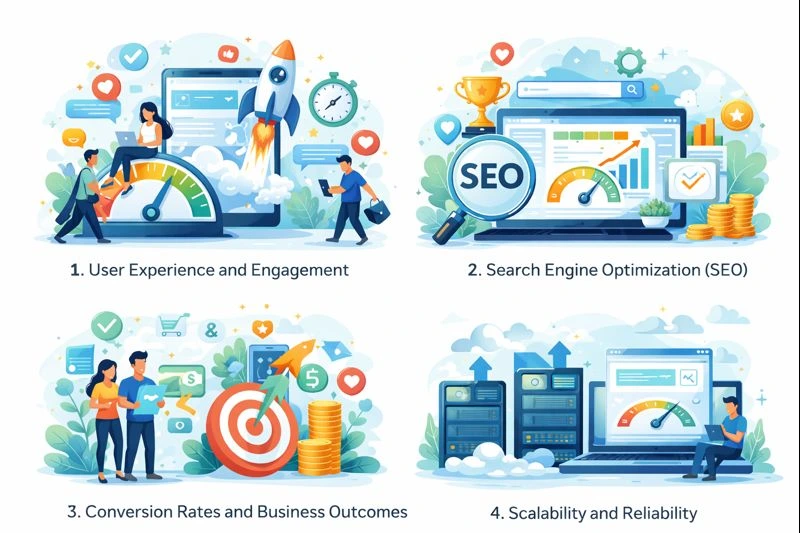
1. User Experience and Engagement
Speed plays a major role in user satisfaction. Research consistently shows that users are likely to abandon a website if it takes more than a few seconds to load. Website performance testing helps uncover issues that frustrate users, such as slow-loading images or scripts that block rendering.
A faster website keeps visitors engaged longer, encourages exploration, and improves overall trust in your brand.
2. Search Engine Optimisation (SEO)
Website performance is a recognised ranking factor for search engines. Metrics like page speed, time to interactive, and overall stability influence how search engines evaluate your site. Regular website performance testing helps ensure your pages meet performance benchmarks, which supports better visibility in search results.
3. Conversion Rates and Business Outcomes
Performance directly affects conversions. Whether the goal is form submissions, purchases, or sign-ups, a slow website creates friction. Website performance testing allows teams to optimise critical user journeys so visitors can complete actions without delays or errors.
4. Scalability and Reliability
Traffic spikes can happen unexpectedly, for example during promotions or product launches. Performance testing helps assess how well a website handles increased load and whether the infrastructure can scale without crashing or slowing down.
What Is Tested in Website Performance Testing?
Website performance testing covers several key areas. Each focuses on a different aspect of how a site behaves under real-world conditions.
Page Load Speed
This measures how long it takes for a page to load fully. It includes metrics such as first contentful paint, largest contentful paint, and total load time. Slow pages often result from large images, unoptimised code, or excessive third-party scripts.
Server Response Time
Server response time indicates how quickly the server processes a request and sends data back to the browser. Performance testing helps identify server-side issues such as inefficient database queries or insufficient hosting resources.
Responsiveness and Interactivity
Responsiveness refers to how quickly a website reacts to user actions like clicks, scrolling, or form input. Website performance testing evaluates delays that may occur due to heavy JavaScript execution or poorly structured code.
Load and Stress Handling
Load testing examines how a website performs under expected traffic levels, while stress testing pushes the site beyond normal limits. These tests reveal at what point performance degrades or errors begin to occur.
Stability and Error Rates
Performance testing also looks at how often errors occur during usage. A stable website should handle requests without frequent timeouts, broken pages, or failed transactions.
Types of Website Performance Testing
Website performance testing can be carried out using several different approaches, depending on the goals of the evaluation. Each type focuses on how a website behaves under specific conditions, from everyday usage to extreme traffic situations. Understanding these testing types helps teams choose the most suitable method for assessing performance and reliability.
The most common types of website performance testing include:
- Load Testing: Simulates normal user traffic to evaluate how a website performs under typical conditions and whether it can handle expected demand without slowdowns or errors.
- Stress Testing: Gradually increases traffic beyond normal levels to identify performance limits and potential failure points during unexpected spikes.
- Endurance Testing: Assesses performance over an extended period to detect issues such as memory leaks or gradual degradation that may not appear in short-term tests.
- Spike Testing: Introduces sudden surges in traffic to observe how quickly the website adapts and recovers, making it suitable for sites with unpredictable or seasonal traffic patterns.
Common Tools for Website Performance Testing
There are many tools available to support website performance testing, ranging from simple browser-based tools to advanced testing platforms.
Google PageSpeed Insights
Google PageSpeed Insights analyses page performance on both mobile and desktop devices. It provides clear scores and actionable recommendations to improve speed and usability.
Lighthouse
Lighthouse is an open-source tool that audits performance, accessibility, and best practices. It is widely used for quick website performance testing during development.
GTmetrix
GTmetrix offers detailed reports on page load times, page size, and performance issues. It also allows users to test from different locations and browsers.
WebPageTest
WebPageTest provides advanced testing options, including multi-step transactions and detailed performance waterfalls. It is useful for deeper analysis.
Apache JMeter
Apache JMeter is commonly used for load and stress testing. It allows teams to simulate large numbers of users and measure how servers respond under pressure.
Best Practices for Effective Website Performance Testing
To get the most value from website performance testing, it should be done regularly and integrated into the development process. Testing early helps catch issues before they reach users. Testing after updates ensures new features do not introduce performance regressions.
It is also important to test across devices and network conditions. A website that performs well on a fast desktop connection may behave very differently on a mobile network.
Finally, performance testing should always lead to action. Use test results to optimise images, reduce unnecessary scripts, improve server configuration, and refine overall site architecture.
Conclusion
Website performance testing plays a vital role in creating fast, reliable, and user-friendly websites. By understanding what it is, why it matters, and which elements should be tested, teams can make informed decisions that improve both user experience and business outcomes.
With the right tools and a consistent approach, performance testing becomes an ongoing practice rather than a one-time task. If you want your website to stay competitive, responsive, and trusted by users, now is the time to prioritise performance.
Pixie Digital Marketing Agency can help you assess, optimise, and maintain your website’s performance through data-driven testing and practical optimisation strategies. Get in touch with Pixie to ensure your website delivers a fast, seamless experience that supports your long-term digital goals.
