

Table of Contents
Digital ads have become one of the most powerful tools for businesses looking to reach modern audiences. From small local brands to global companies, online advertising allows marketers to connect with potential customers in a way that is measurable, flexible, and highly targeted. As people spend more time online across devices and platforms, digital ads play an increasingly important role in shaping buying decisions.
This article explains what digital ads are, why they matter, and how businesses can use them effectively. Whether you are new to online advertising or looking to refine your strategy, this guide will help you understand the essentials.
What Are Digital Ads?
Digital ads, also known as digital advertising or online advertising, refer to promotional messages delivered through online channels. These channels include websites, search engines, social media platforms, streaming services, apps, and digital audio platforms.
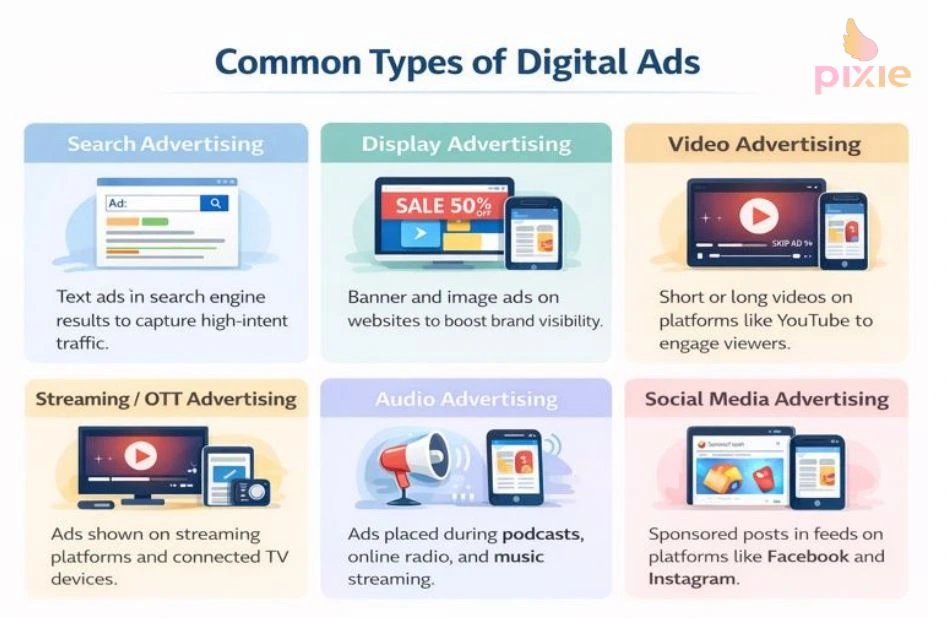
Digital ads appear in many formats, such as text ads in search results, display banners on websites, video ads during streaming content, sponsored posts on social media, and audio ads in podcasts or music apps. Their purpose can vary, ranging from building brand awareness to driving website traffic, generating leads, or increasing sales.
Unlike traditional advertising, digital ads allow advertisers to monitor performance in near real time and make adjustments while a campaign is still running.
Why Digital Ads Matter for Businesses Today
The importance of digital ads lies in how people consume information and make purchasing decisions. Consumers are constantly connected through smartphones, laptops, smart TVs, and voice-enabled devices. This creates multiple opportunities for brands to reach audiences during everyday activities.
Digital ads help businesses stay visible when potential customers are researching products, browsing social media, watching videos, or listening to audio content. Even when an ad does not lead to an immediate purchase, repeated exposure can strengthen brand recall and influence future decisions.
For businesses of all sizes, digital advertising also offers a more accessible entry point compared to many traditional media channels.
Digital Ads vs Traditional Advertising
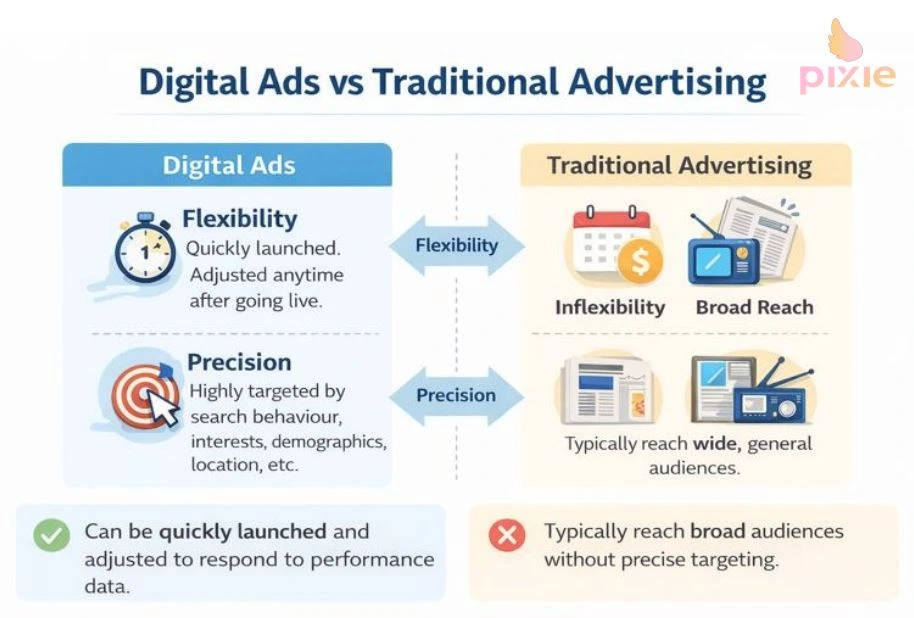
One of the key differences between digital ads and traditional advertising is flexibility. Digital campaigns can be launched quickly, sometimes within minutes. Creative elements, targeting settings, and budgets can often be adjusted after the campaign goes live, allowing advertisers to respond to performance data.
Precision is another major distinction. Traditional ads typically reach broad audiences, while digital ads can be targeted based on search behaviour, interests, demographics, location, and previous interactions with a brand. This helps businesses focus their budget on audiences who are more likely to engage.
Common Types of Digital Ads
Digital ads come in various formats, each designed to support different marketing goals. Understanding how each type works helps businesses choose the right approach based on audience behaviour, budget, and campaign objectives.
Search Advertising
Search advertising places ads directly within search engine results pages when users enter specific keywords or phrases. These ads are typically text-based and appear above or alongside organic search results. Because they are shown to users who are actively searching for solutions, search ads are effective for capturing high-intent traffic and driving actions such as enquiries, bookings, or purchases. This format is commonly used by businesses that want immediate visibility for relevant searches.
Display Advertising
Display advertising uses visual elements such as images, banners, or animations to deliver messages across websites, apps, and digital platforms. These ads often appear alongside online content and are designed to increase brand visibility and recognition. Display ads are frequently used for remarketing, allowing brands to re-engage users who have previously visited their website or interacted with their content. Over time, consistent display exposure helps reinforce brand awareness and familiarity.
Video Advertising
Video advertising delivers promotional messages through short or long-form video content. These ads may appear before, during, or after videos, as well as within websites and mobile apps. Video ads are effective for storytelling, demonstrating products or services, and creating emotional connections with audiences. With sound, motion, and visuals working together, video advertising is well suited for building brand identity and communicating more complex messages.
Streaming and OTT Advertising
Streaming and over-the-top advertising reaches audiences through online video services that do not depend on traditional television infrastructure. These ads appear on smart TVs, streaming platforms, and connected devices while users watch long-form content at home. Streaming ads provide a premium viewing environment and often reach viewers in a more focused, lean-back setting. This format is commonly used for brand-building campaigns that aim for high-quality exposure.
Audio Advertising
Audio advertising appears within digital audio content such as podcasts, online radio, and music streaming platforms. These ads are heard while listeners are engaged in daily activities like commuting, working, or exercising. Audio ads rely on voice, tone, and messaging clarity to capture attention without visuals. When used consistently, audio advertising can build strong brand recall and reach audiences in moments where screens are not the main focus.
Social Media Advertising
Social media advertising places sponsored content directly into users’ feeds on platforms such as LinkedIn, X, Instagram, and Facebook. These ads are designed to blend naturally with organic posts while still standing out through targeted messaging and creative visuals. Social media ads support a wide range of objectives, including awareness, engagement, website traffic, and conversions. Detailed targeting options also allow brands to reach specific audience segments based on interests, behaviour, and demographics.
How Digital Ads Work
Digital ads can be purchased in different ways, depending on the platform and format. Some ads are bought directly from publishers, while others are purchased programmatically using automated systems.
Programmatic advertising relies on platforms that match ads with available inventory in real time, based on targeting criteria and bidding strategies. This process helps advertisers reach relevant audiences across multiple websites and platforms efficiently.
Digital Advertising Costs and Pricing Models
The cost of digital ads varies depending on format, competition, and targeting. Common pricing models include cost-per-click, where advertisers pay when someone clicks an ad, and cost-per-thousand impressions, where advertisers pay based on how often an ad is shown.
Other models focus on specific actions, such as sign-ups or purchases. Because digital ads are highly measurable, businesses can align their spending with clear goals and performance metrics.
Measuring Digital Ad Performance
One of the strengths of digital ads is the ability to track performance in detail. Key metrics include impressions, clicks, click-through rate, reach, and video completion rate.
Outcome-focused metrics such as conversion rate, return on ad spend, and return on investment help advertisers understand the real impact of their campaigns. Tracking these metrics allows businesses to make data-informed decisions and improve future campaigns.
Best Practices for Successful Digital Ads
To get the most from digital advertising, start by clearly defining your target audience and campaign goals. Use performance data to monitor results regularly and make adjustments when needed.
Testing different creatives, formats, and audience segments helps identify what resonates best. Authentic messaging is also important, as online audiences are quick to recognise content that feels irrelevant or forced.
Consistency, relevance, and ongoing optimisation are key elements of long-term success with digital ads.
Final Thoughts
Digital ads offer a practical and measurable way to connect with audiences across online channels. With flexible budgets, precise targeting, and clear performance insights, digital advertising supports both short-term results and long-term brand growth.
By understanding how digital ads work, the available formats, and the right metrics to track, businesses can make more confident marketing decisions and use their budget more effectively. At Pixie Digital Marketing Agency Bali, we focus on creating digital ads that are purposeful, well-targeted, and aligned with real business goals.
We believe effective digital advertising comes from thoughtful strategy, consistent optimisation, and a clear understanding of your audience. If you are ready to refine your digital ads and strengthen your online presence, Pixie is here to support your next step with clarity and care.
